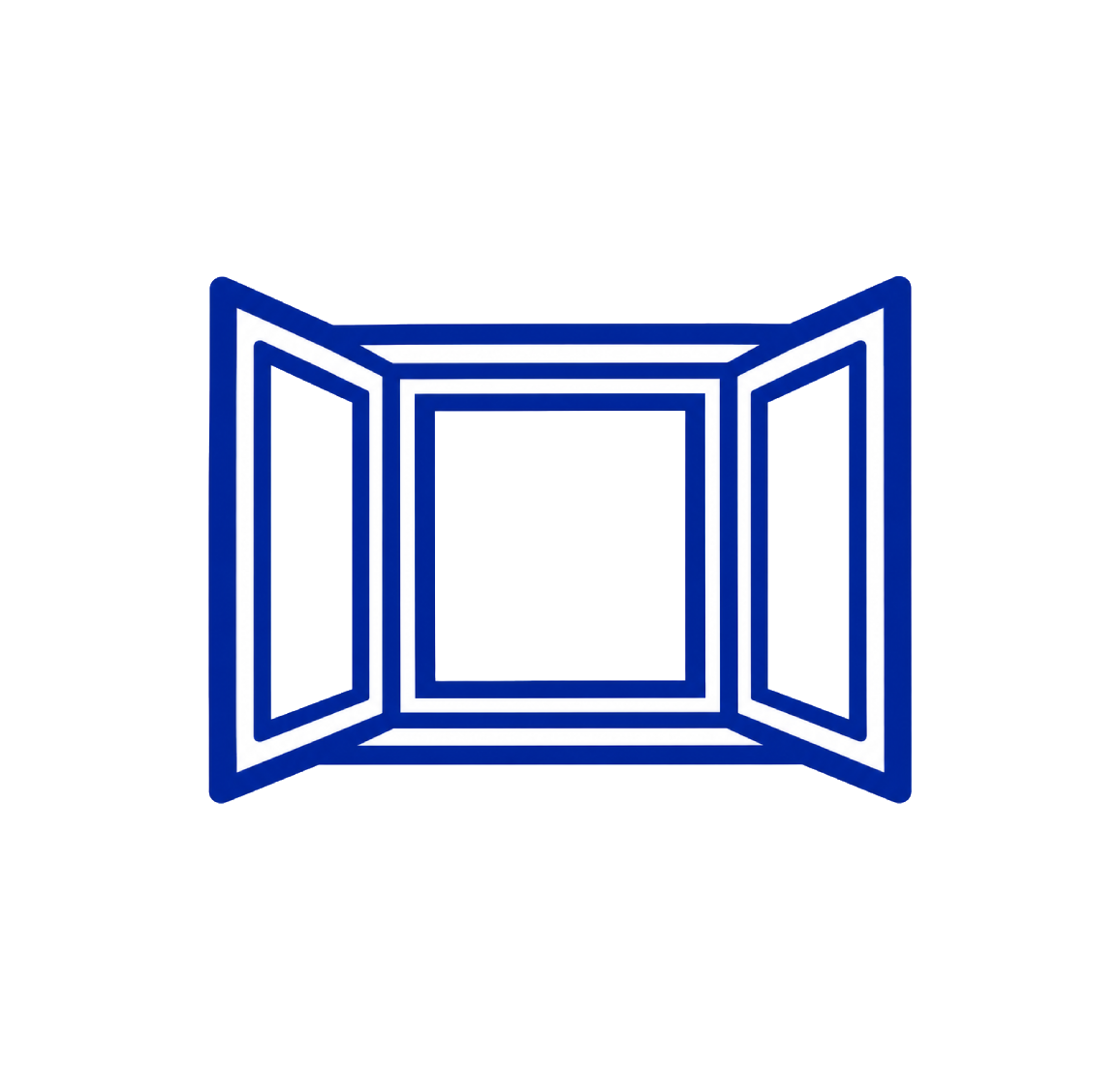

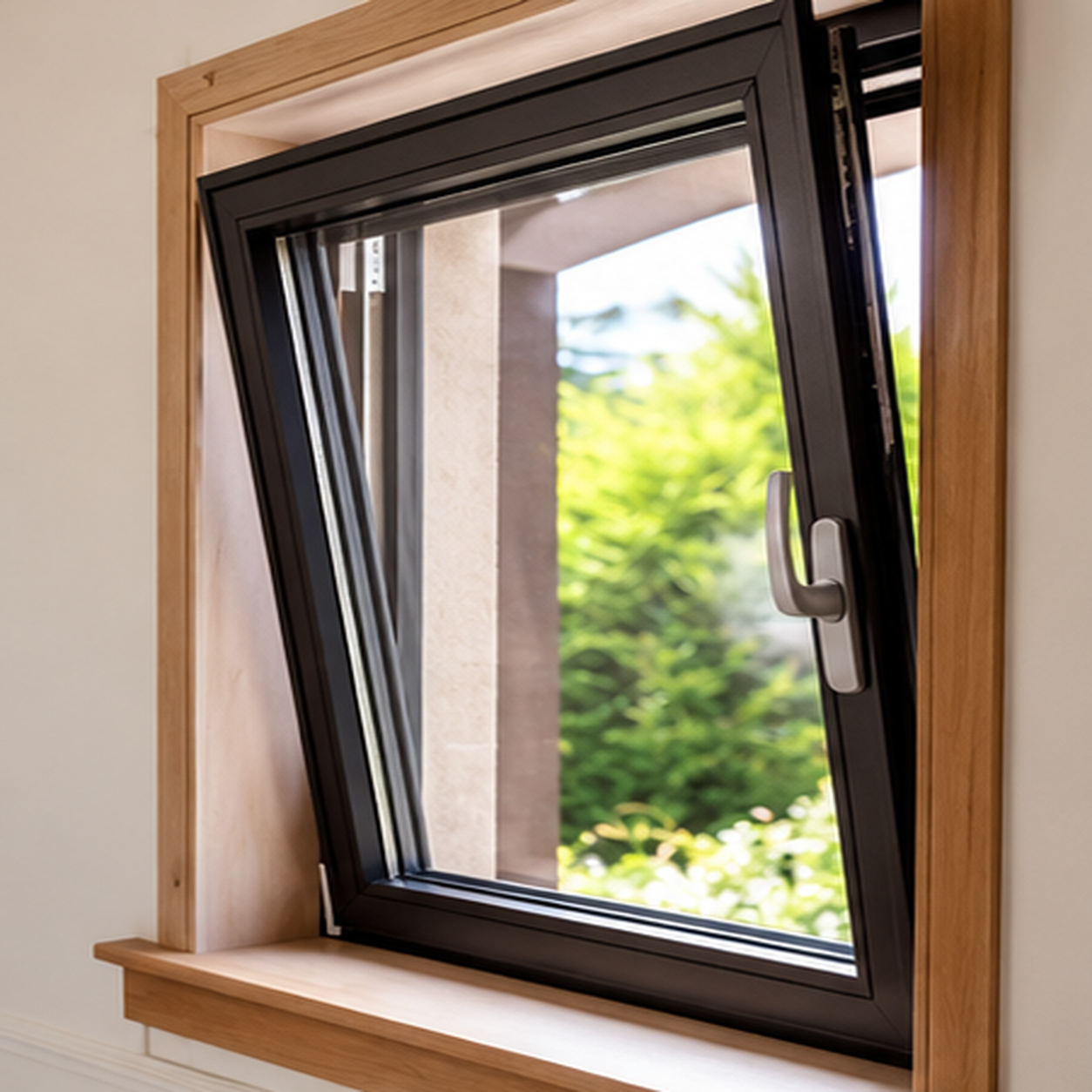
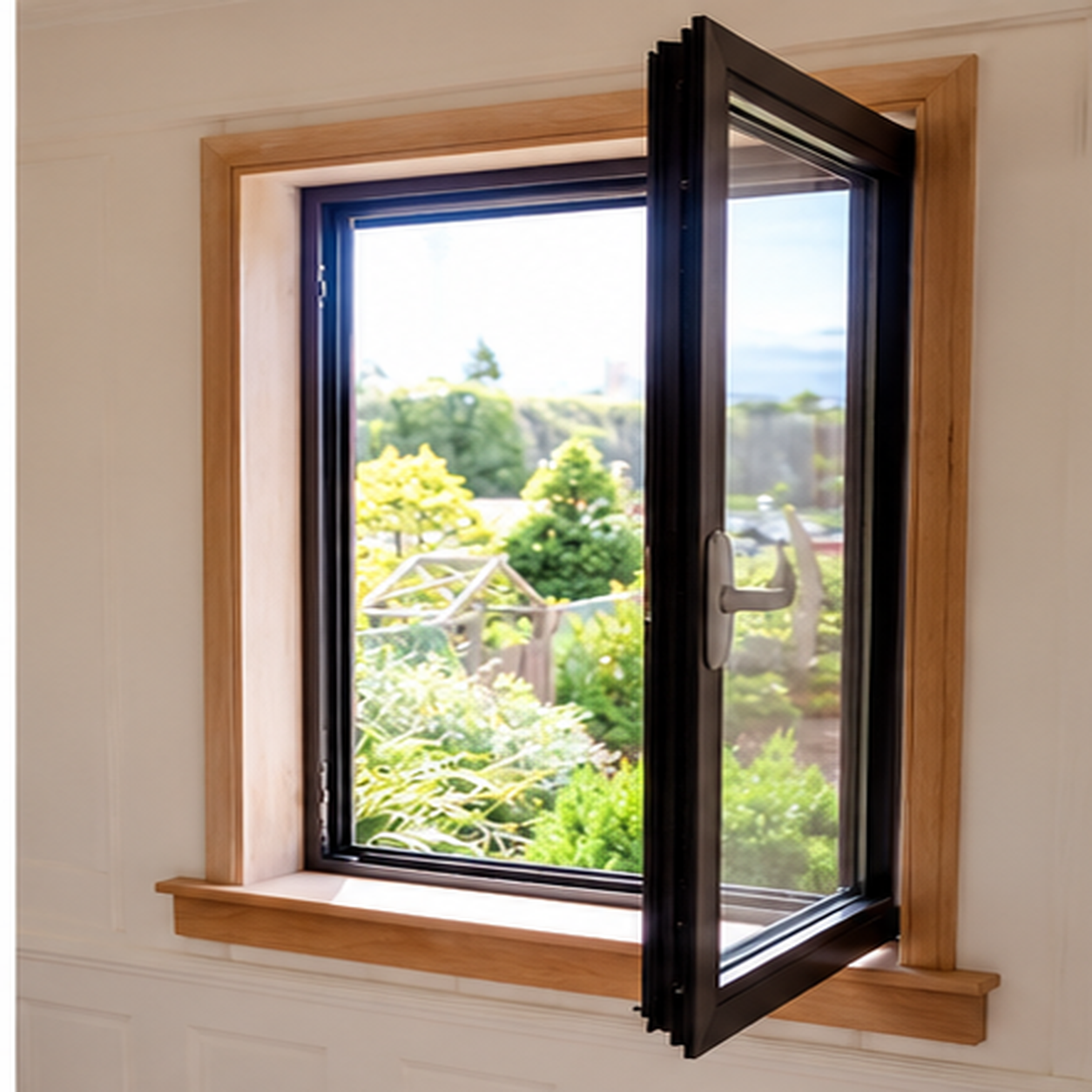
A tilt and turn window uses one handle for two ways of opening. Turn the handle one way and the sash tilts in at the top for ventilation. Turn it the other way and the sash swings in on the side hinge so the glass can be cleaned from inside.
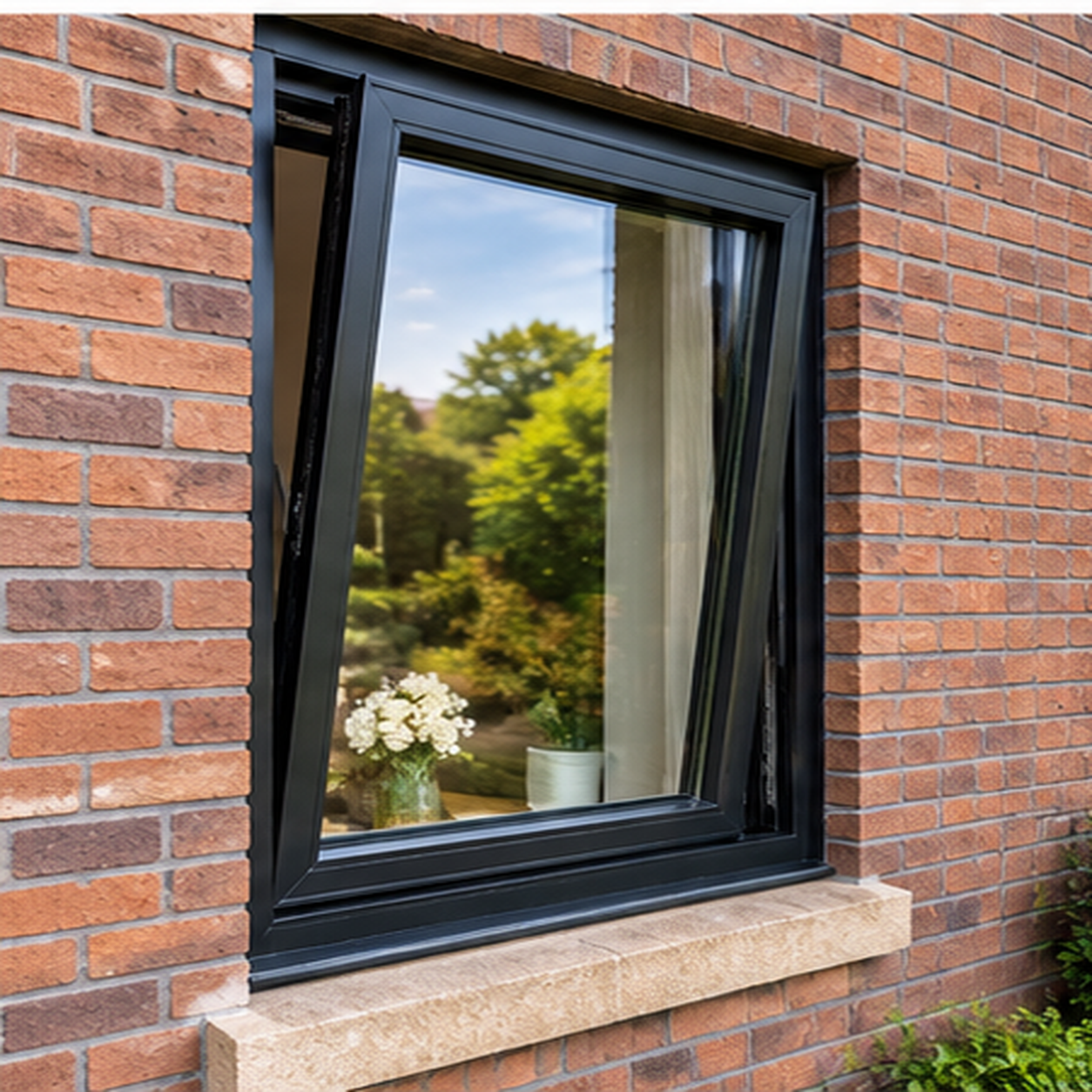
The designs here are dark-framed sashes in brick openings. In the tilt position the top of the sash comes inward and the bottom stays on the frame, which vents the room without leaving the window wide open.
Why choose tilt and turn
One sash does the job of a vent and a fully opening window, which is useful upstairs where you do not want the window to swing out over a path.
Vent from the top
The sash tips inward at the head, so air can leave the room while the opening stays too narrow to climb through.
Open fully inward
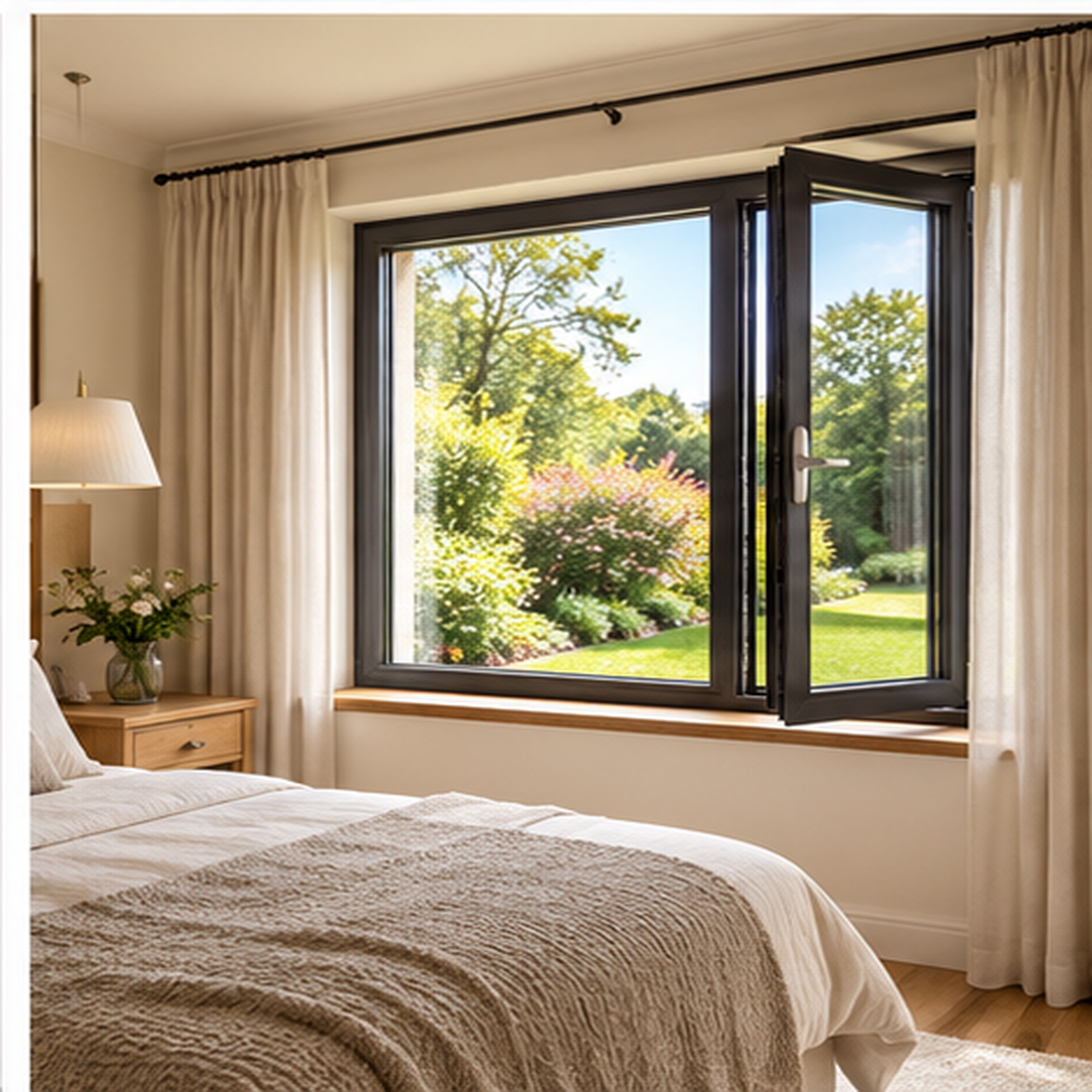
On the side hinge the whole sash swings into the room, so both faces of the glass can be reached from inside.
What is included
Each window is a single sash in an outer frame, with the handle that switches between tilt and turn.

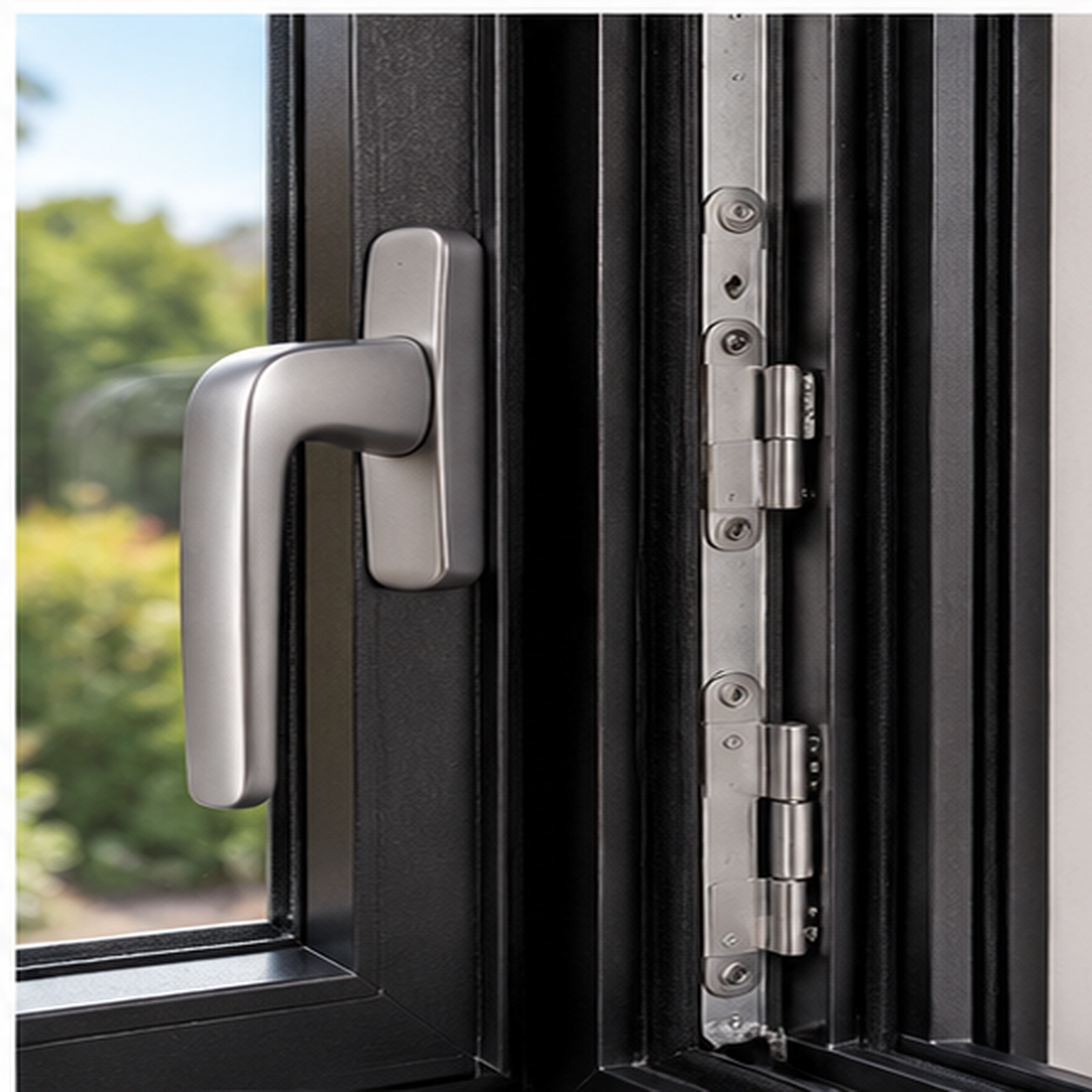
One handle, two positions
The handle locks the sash, sets the tilt, or releases the side hinge. There is no separate fanlight.

Inward opening
The sash comes into the room, so it does not project over a garden, a path, or a neighbour’s boundary.
- Tilt for background ventilation
- Turn inward to clean the outside glass
- Dark frames sized to the brick opening
Where they are used
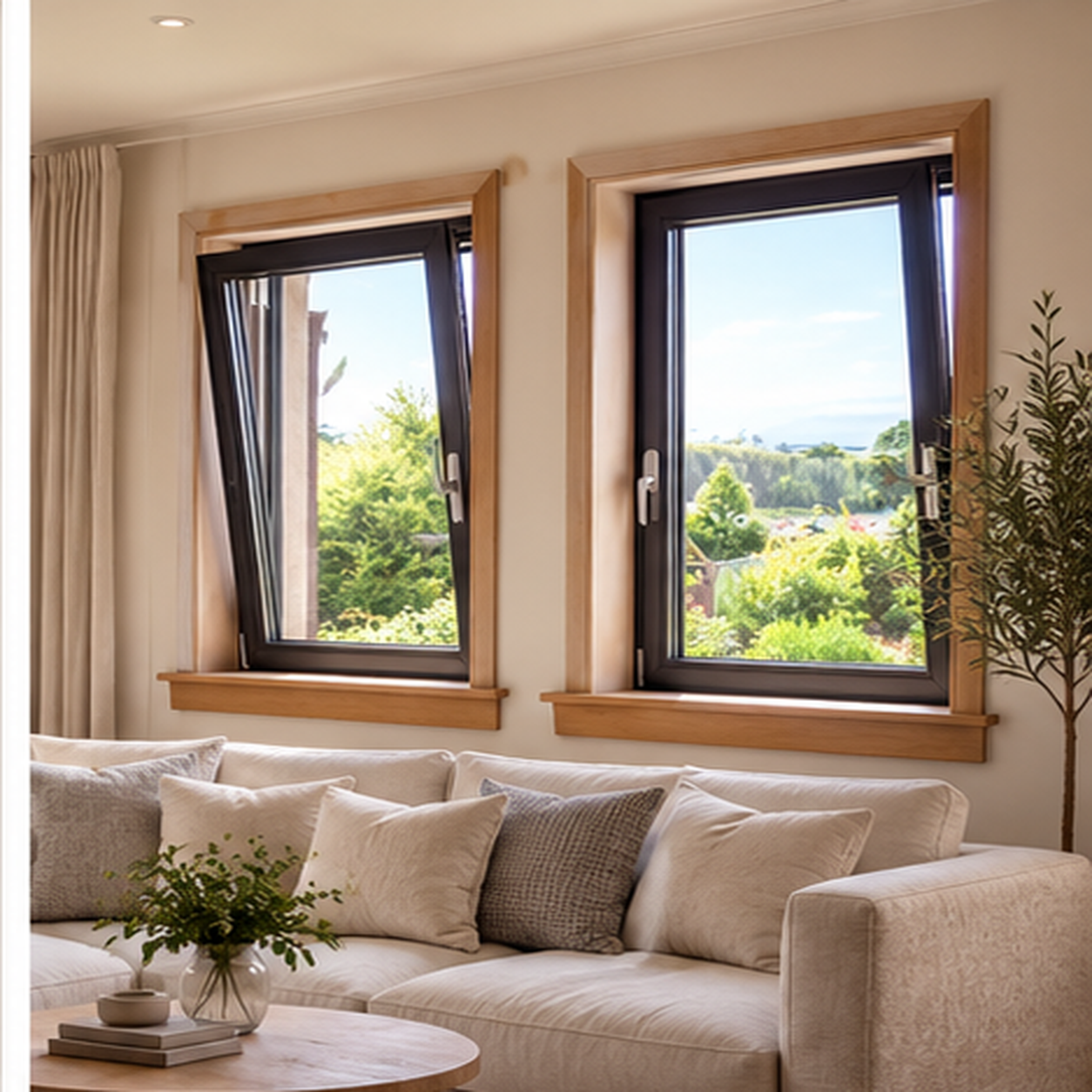
The photographs in this range show the sash in the tilt position.

Single sashes

Brick openings

Inward tilt ventilation
We set the handle side to suit the room, so the open sash clears curtains and furniture.
Tilt and turn designs
These are designs from our tilt and turn windows range. Open any image to view it larger.
Frequently asked questions
Tilt tips the top of the sash inward for ventilation. Turn swings the whole sash inward on the side hinge.
No. Both positions open into the room, so the sash does not swing over the outside.
Yes. In the turn position the sash swings in, so you can reach the outer face without going outside.
The tilted sash stays held at the top of the frame. The gap is for air, not a full opening.