
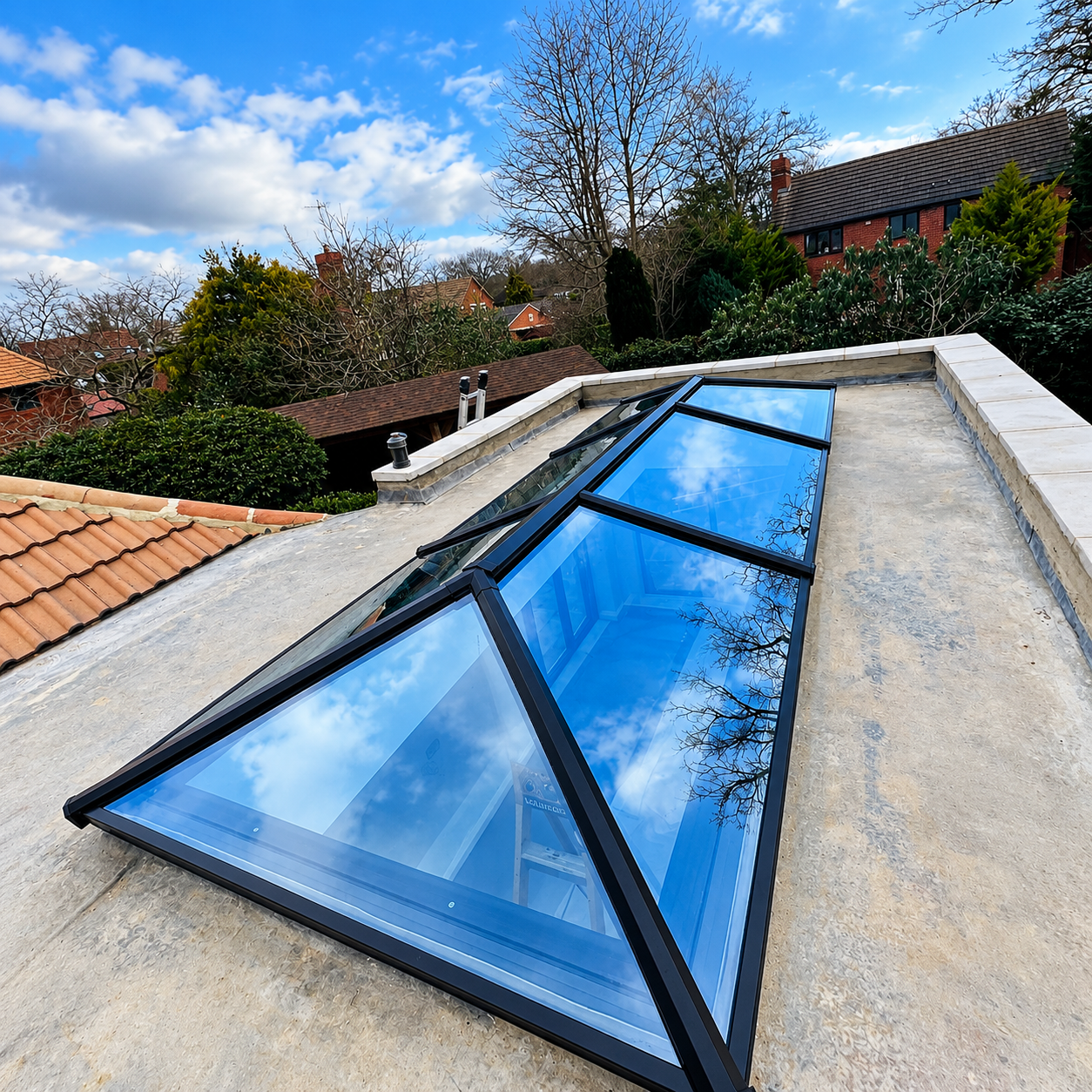
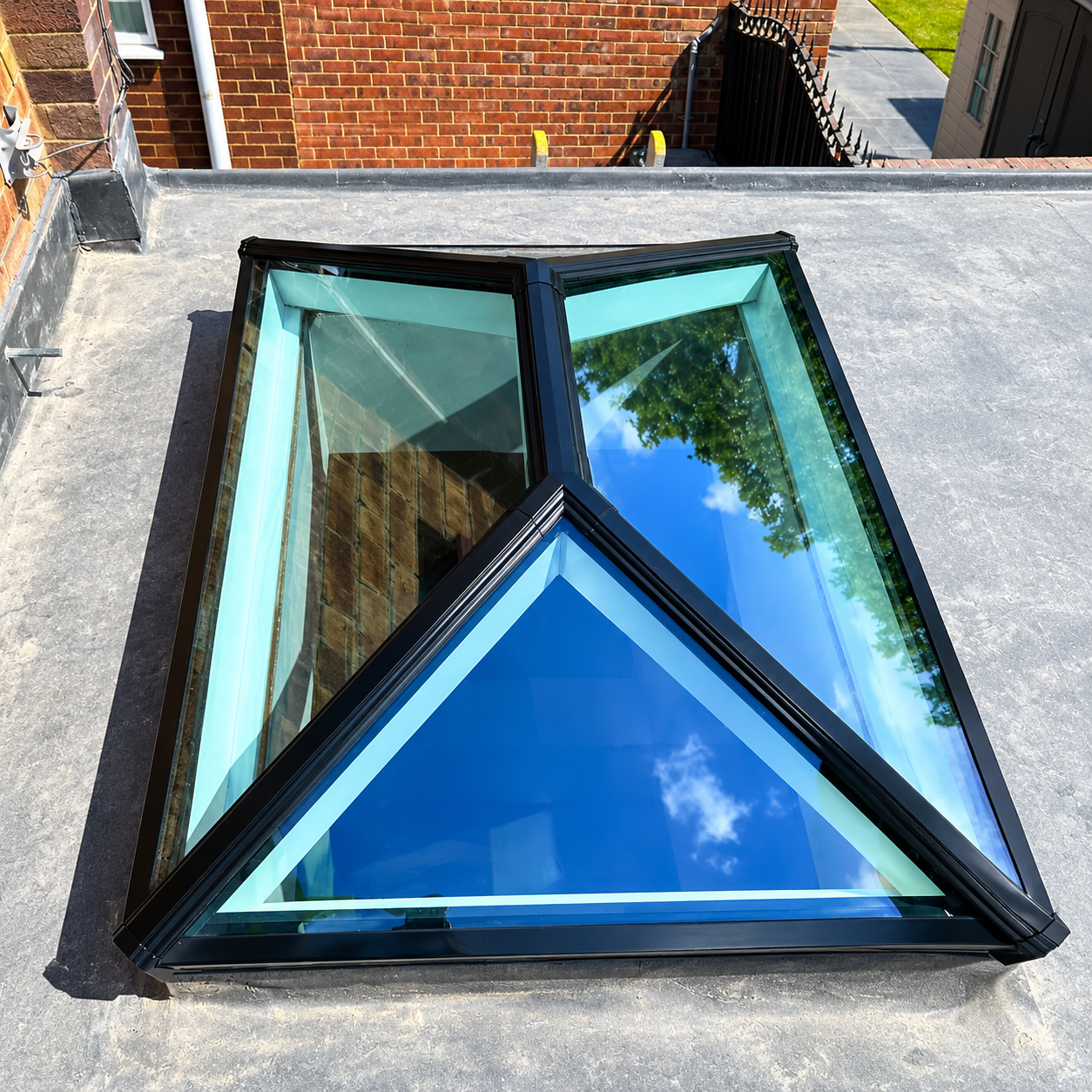
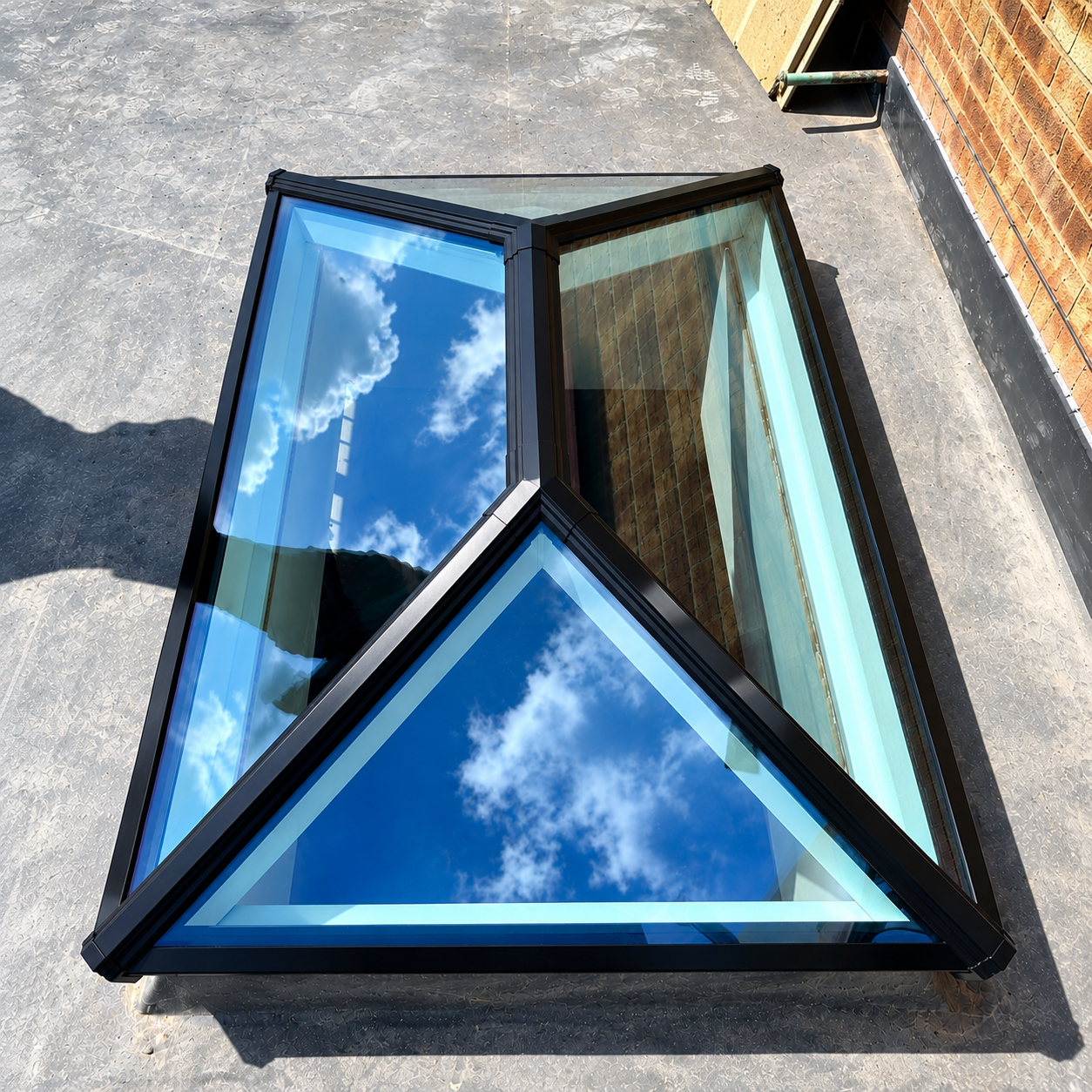
A roof lantern is a raised glazed structure on a flat roof. The designs here include long linked lanterns with hipped ends, and square lanterns with a simple cross of bars, so a kitchen, orangery, or extension is lit from above.
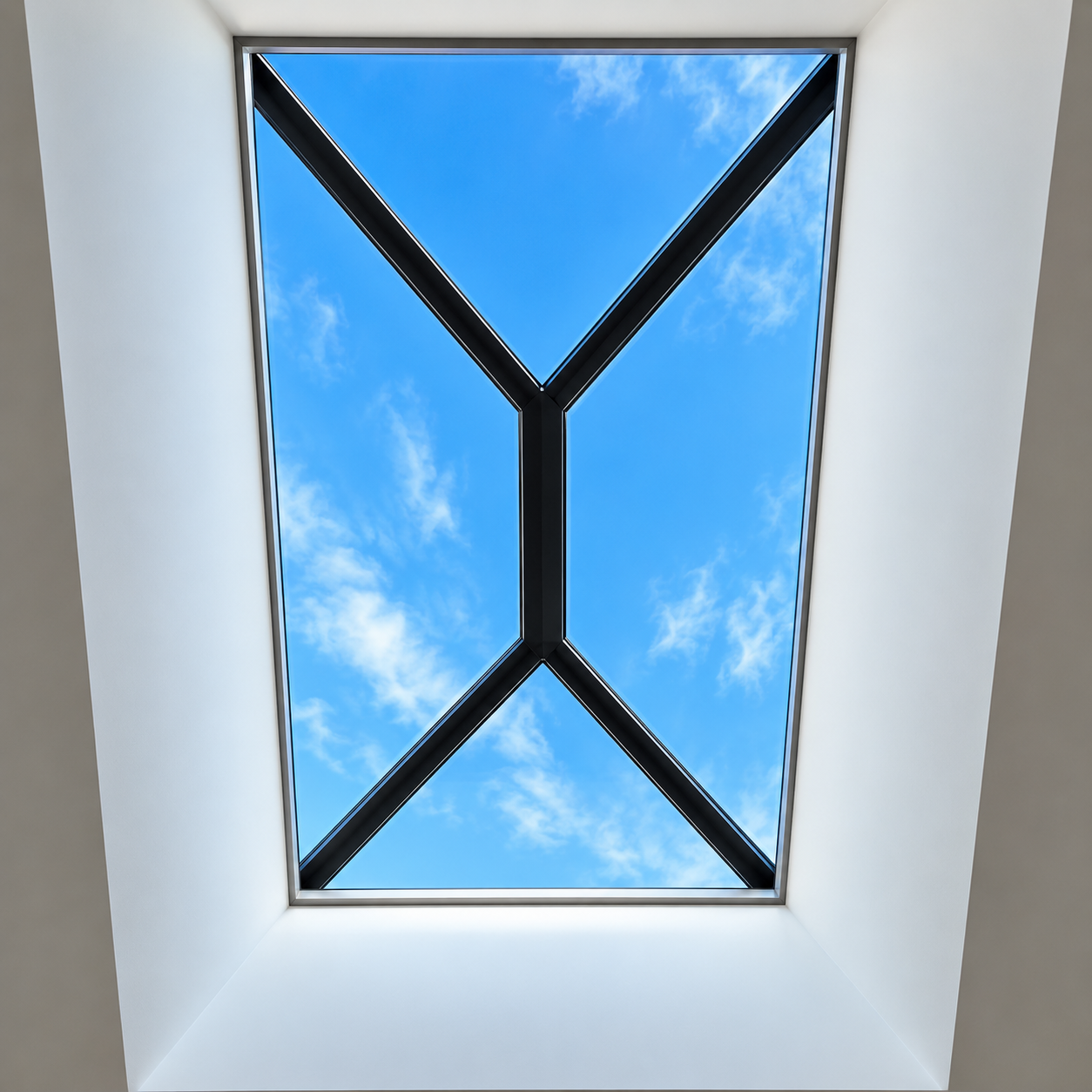
The lantern sits on an upstand in the flat roof. From outside it reads as a low glass roof. From inside, the bars frame the sky and the room does not rely only on the windows in the walls.
Why choose a roof lantern
You keep a flat roof and solid side walls, and still get a conservatory amount of light over the middle of the room.
Light over the room
The glass is above the space you use, which is useful in a deep extension where the back wall is far from the garden.
Pyramid or linked runs
A square lantern suits a compact roof. A longer run of hips and ridges suits a kitchen or orangery.
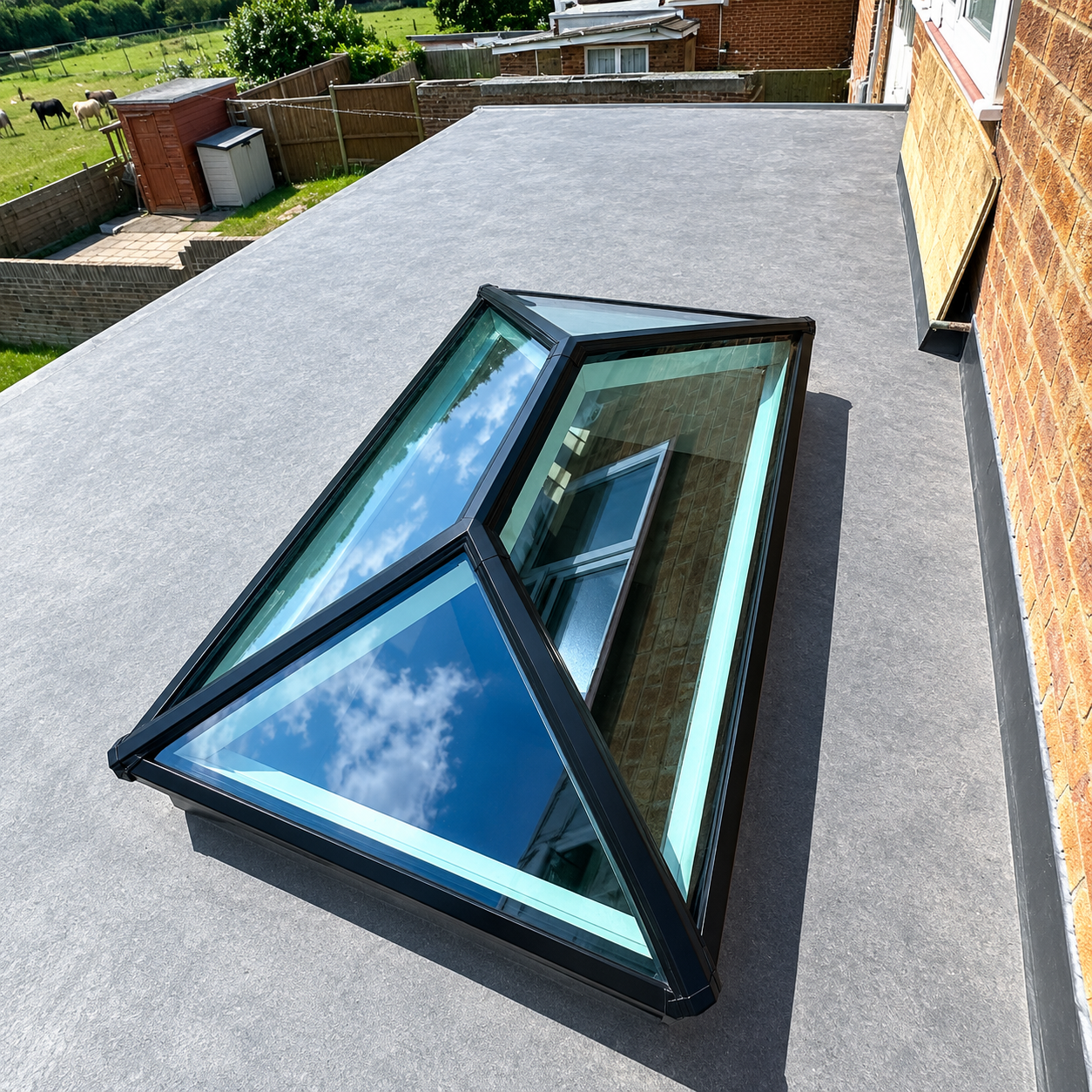
Lantern details
The frame, the glass, and the upstand are designed together.

Slim dark bars
The rafters and hip bars stay narrow so the view of the sky stays open.

Built on a flat roof
The lantern lands on a weathered upstand, with the surrounding roof remaining flat.
- Square lanterns and longer linked lanterns
- Hipped ends that throw water onto the flat roof
- Used over kitchens, orangeries, and extensions
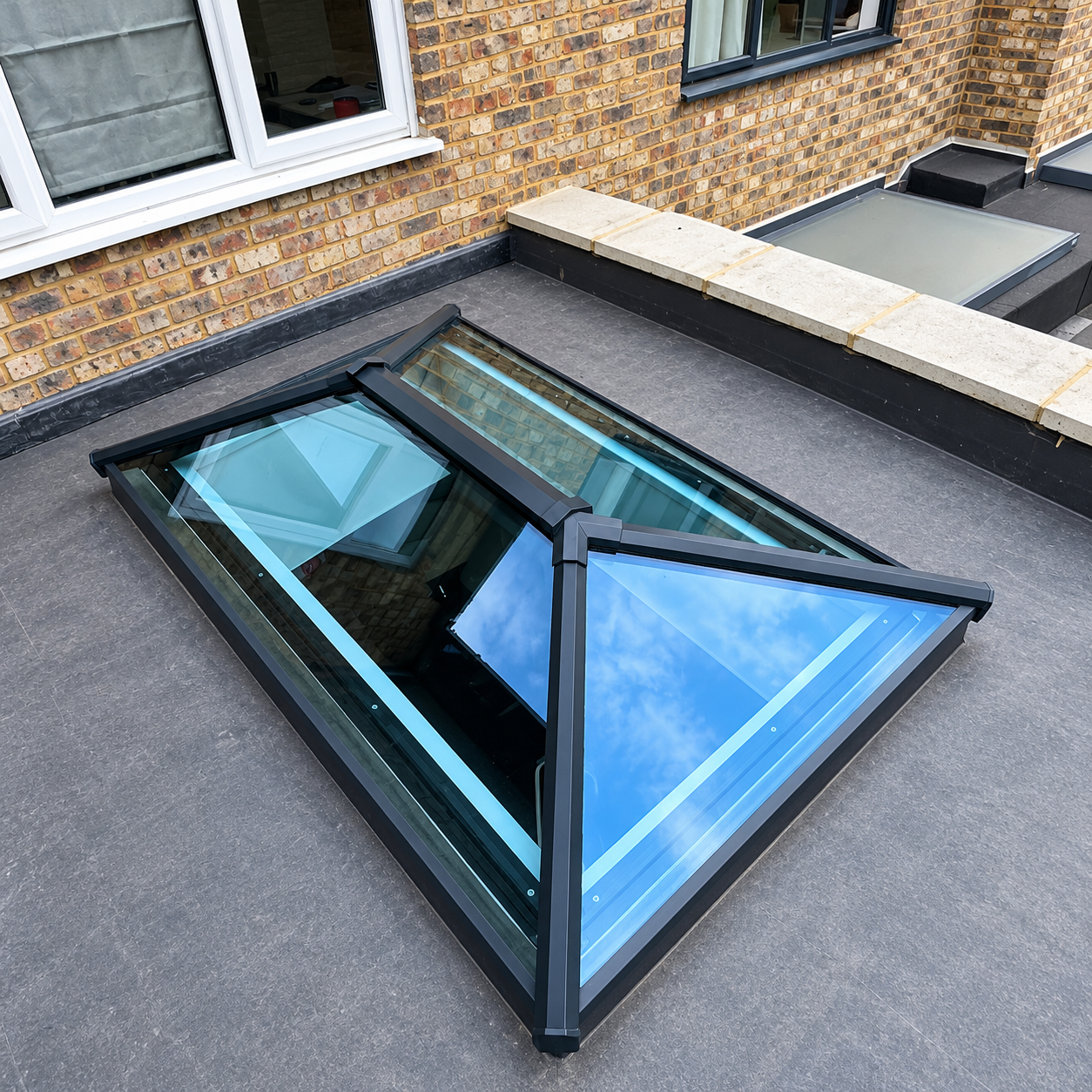
Lantern shapes
The range on this page shows these forms.

Linked roof lanterns

Hipped glass roofs

Square lanterns with a cross bar
The length and width follow the room below and the flat roof available around the upstand.
Roof lantern designs
These are designs from our lanterns roof range. Open any image to view it larger.
Frequently asked questions
A roof light is a flat unit in the roof plane. A lantern is raised, with hips or a ridge, so it has more glass and more height.
Yes. The longer designs on this page are linked lanterns with hipped ends, made to the length of the roof.
Yes. The lantern sits on an upstand and the roof around it stays flat.
Yes. The survey covers the flat roof, the structure, and where the light should fall inside.